Google+ Positive Psychologist: Strategy

Leader

Showing posts with label Strategy. Show all posts

Friday, May 16, 2014

The 9 mantras of Modi’s spectacular success


If Narendra Modi has made it to 7, Race Course Road, it is a triumph not only of strategy and commitment, but of the basic management and marketing principles that his campaign embraced. 

Right from the outset, the party under Modi set itself stretch targets – which focused the efforts of all the stakeholders to one central objective: Mission 272+. This was the ultimate goal of getting the BJP a majority of its own even while focusing on building the right alliances in the right states and voter niches. Equally important, the BJP was a perfectly aligned force from teeth to tail – from the one leader (Modi) who led the fight from the front, to the last karyakarta, the BJP and RSS foot soldiers, who felt they had a personal stake in this election. 

When there is such an alignment from top to bottom, it is no surprise that the end-results have been so gratifying. The chemistry between top and bottom was electrifying. Unlike the Congress, where the bosses kept themselves cocooned and the workers ran a disprited campaign, in the BJP the boss led from the front – driving the enthusiasm of the cadre. 

The boss put in a grueling 20-hour day, cross-crossing addressing over 450 rallies in a few months, and addressing even larger audiences with his unique 3D projection technology which enabled him to be in several places at the same time. In the run-up to the election, we had run a story on the management lessons we could learn from Modi’s campaign. It is worth recalling it again in the context of the success of the BJP and Modi today (16 May). These are some of the things one can learn from the success of the Modi juggernaut.

Modi’s march to 7, Race Course Road, is now a case study on how to uses the rules of management and marketing to lead and win.

1. Declare your ambitions and goals clearly
2. Set stretch targets and align your entire team to the final goal
3. Bbreak the final target personal targets into a set of smaller targets and milestones
4. Demonstrate strength, then invite stakeholders
5. Eliminate doubters and bring in team players
6. Plan meticulously and in detail
7. Set the agenda and keep control
8. Attack the enemy where he is weak
9. Never play to your weakness

Read more at: http://www.firstpost.com/india/election-results-2014-modis-9-mantras-that-helped-him-win-big-1527081.html/2?utm_source=ref_article


Saturday, March 29, 2014

How to get your mails read


I get this question very often.

I sent many mails but there is no response from y client list. How do I get my mails answered?

Here is a simple strategy...

1. Keep your mails short
2. Keep it neat and clean, i.e., format for readability and clarity
3. Give a call for action
4. Tell me how simple the action is
5. Tell me how it would help me (save money/time and so on)


Friday, July 12, 2013

Mail is better

What do you think about this article? Is it true that all the modern hyped and all so relevant marketing tools of social media are not competent enough to beat the good old mailing technique? Are newsletters, mailer the only option or atleast the most successful option?

Well the article below says that. Here it goes:

In 2013, no company can expect to be taken seriously if it’s not on Facebook or Twitter. An endless stream (no pun intended) of advice from marketing consultants warns businesses that they need to “get” social or risk becoming like companies a century ago that didn’t think they needed telephones.
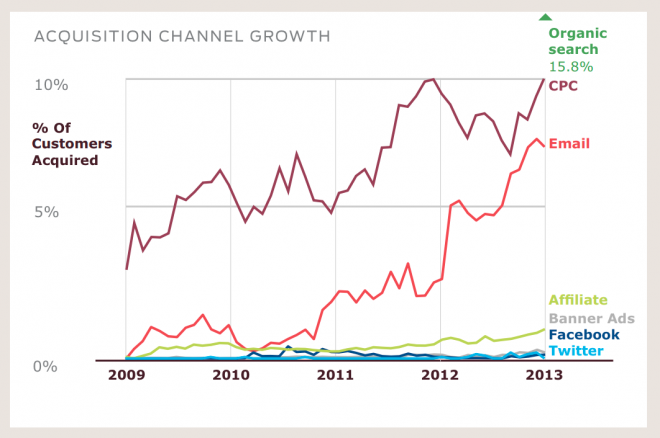
Despite the hype that inevitably clings to the newfangled, however, it’s relatively antique tech that appears to be far more important for selling stuff online. A new report from marketing data outfit Custora found that over the past four years, onl
ine retailers have quadrupled the rate of customers acquired through email to nearly 7 percent.

Facebook over that same period barely registers as a way to make a sale, and the tiny percentage of people who do connect and buy over Facebook has stayed flat. Twitter, meanwhile, doesn’t register at all. By far the most popular way to get customers was “organic search,” according to the report, followed by “cost per click” ads (in both cases, read: Google).

So can I ignore my facebook account and focus on the mailer? I don't think that is a good idea. I think facebook, twitter or any other account on social media allows you to build a character to your brand and then the original website, brochure and interaction allows you to seal the deal. A good organic mix is important for a successful marketing effort.

Monday, June 3, 2013

Monday blues: Use the tested method


For the Monday blues series....

Sometimes we ignore the tested and traditional methods while solving a problem as we are focused on finding something new and innovative. Try the traditional method first and then look for creativity. May be the traditional one would work better.

This image is from Manama souq, Bahrain where traditional lanterns were used to decorate the ceiling at the welcome arch.

All pics displayed here can be downloaded and used for free. Just give a link here. You can find more pics here: t3i photography. 

Thursday, November 18, 2010

Talent or team?

Michael Jordon, the iconic basketball player says... "Talent wins games, but teamwork and intelligence win championships".

I agree to an extent. It is necessary to depend on talent and the team together. Each individual should be able to delve into his/her experience and pool of individual talent to be of use at a certain part of the whole process.

Blessed is a manager who has the resources (s)he can count on in times of need. Though I support this view of the team supporting and winning championships together, I also believe that it is important to have few aces to shoot those crucial baskets needed to have things change. When you have aces like that, don't let them fight the whole battle for you. Coaches have done this in far too many games and army generals have done this in battlefields. The war is the championship but the decisive strikes and kills come from few aces who are the heros and rule the day. They deserve much more than the team-like treatment, a cult like status, a hero like worship. This is more of a responsibility than a title, but a well deserved one at that. So if you are planning your team, ensure you have those aces in place.

Sunday, October 24, 2010

The psychology behind Off-by-one pricing

A common practice among retailers is to price products at 199 or 999 instead of rounding the price up to 200 or 1,000. Cognitive psychologists often refer to this as the left-digit effect and it is the one of most prevalent pricing strategies in the world.

Aleem Bawany explains the psychology behind off-by-one pricing here.

Saturday, October 9, 2010

The Last Interaction

Last week I happened to watch parts of Once upon a time in Mumbai. Ajay Devgan wants to gift something to Kangana and buys one Amrud for Indian rupee 400 against a price of Indian rupee 0.40.

The logic used is what if this is the last piece with you? The price goes up to 4. What if this is the last piece in Mumbai? The price goes up to 40 bucks. What if this is the last piece on the planet? The price goes up to 400 bucks.

There is a lesson in sales. Every sale you make is different if you have a choice of making another sale. Every interaction is different when you know there is another chance. If you know there is another chance to impress, sell, convince, win over then your effort isn't as heartful.

When you know this is the last chance, the last opportunity, your approach, passion is very different. When closing a sale or interaction, either business or personal, just pause and think if you would want to be remembered like this? It takes your attitude to another level. A level where leaders operate. That's the stuff you should be doing, aiming at. Try and see. Your success rate goes North. Each interaction would be awesome.

Tuesday, July 27, 2010

Add sizzle

"In five years' time, 70 per cent of India will be under 35 years of age. These consumers haven't grown up with Godrej and as their spending power grows, my brand and products must be relevant for them. How do we add sizzle to our products? That's our challenge." Vibrant products riding on technology and quality is the answer.

--- Vivek Gambhir, chief strategy officer, Godrej Industries.

Read full post here.

Monday, February 8, 2010

Radically overdeliver

One way to think about running a successful business is to figure out what the least you can do is, and do that. That's actually what they spent most of my time at business school teaching me.

No sense putting more on that pizza, sending more staff to that event, answering the phone in fewer rings... what's the point? No sense being kind, looking people in the eye, being open or welcoming or grateful. Doing the least acceptable amount is the way to maximize short term profit.

Of course, there's a different strategy, a crazy alternative that seems to work: do the most you can do instead of the least.

Radically overdeliver.

Turns out that this is a cheap and effective marketing technique.

--- From Seth Godin's blog

Tuesday, November 17, 2009

Painless quick success

There are only two ways to win in the market.

You can create a breakthrough. A promotion so powerful that people can't help but engage. An innovation so remarkable, people can't help but talk about it. A pricing strategy or ad campaign that breaks the mold and is worthy of attention. This takes huge guts and substantial investment.

Or you can win with consistent benefits, delivered over time. You win by incrementally earning share, attention and trust. This might take years.

Almost all marketing attempts to do neither of these, and of course, fail. Painless and quick are rarely associated with 'successful.'

--- Seth's blog

Tuesday, August 25, 2009

Online noise and teens

Today's teens inhabit a "digital marketing ecosystem" where their identities and interactions are virtually inseparable from the logos stamped all over them, new research suggests.

"It becomes a part of how they communicate with their friends," says Kathryn Montgomery, a communications professor at American University in Washington, D.C. "If they're incorporating brands into their profiles and communicating those with their friends, if the companies are inserting the products into the games young people play, if they're part of the use of mobile technology so there's a brand presence that follows their every move — that is creating a new kind of intimacy."

The brain doesn't reach full maturity until the early 20s and one of the puzzle pieces missing in adolescence is impulse control — a fact that will come as no surprise to any parent of a teen, she says.

"We're known for as long as branded communication has been around that you can't just shout at people, you have to interest and engage and entertain them," Cubbon says. "Most advertising online is still pretty much an announcement, it's noise."

Read full article here.

Tuesday, July 14, 2009

Effective marketing

How do you create a more effective marketing program?
Here are a few steps that you need to work on.
  • Position yourself
  • Experiment
  • Look inward
  • Reach out to clients
  • Embrace change
This would make sure you get your basics right, move along and achieve success. Stay alert to trends and effectively use the new tools will reap the benefits of being a leader.

Thursday, June 25, 2009

Its green alright

Sashi was having a discussion with a colleague when I walked up to her counter at McDonalds at Total Mall to order. Being inquisitive I overheard what was being discussed and it is worth mentioning here as it teaches us a lesson or two. The case in point was about which color of cleaning cloth was to be used for cleaning the counter and which one for the trays in which food is served. Whether it was yellow or green was the bone of contention. I was amused at the accuracy with which the process was being taken and taught to the front line employees. I was also stunned by the level of attention to detail being given to trivial things like color of the cleaning cloth and so on.

McDonalds is what it is today because it has perfected the art of servicing great things at cheapest possible prices(read cheaper than competition). Attention to detail should necessarily handled at all levels and ensured to be followed strictest, letter level code. Once this is followed at all levels it becomes a practice and it shows in the kind of service being provided to the customers. So nothing is alright unless it is as per the code. This code should have been studied, prepared after a lot of research and perfected, fool-proof.

So what happens to all that I have always vouched for in my previous posts about breaking the mould and being creative in the way you do regular normal work? If it is helping you serve the customer better, go for it. Well then McDonalds isn't you cup of tea then. My friends in hospitality industry tell me that a lot of research goes into drawing plans for the kitchen floor and the service front end. This game is different. It is about fitting in a mould and working for perfection and meeting the requirements. In case you have a revolutionary idea that would help McDonalds or your firm, I don't think they would deny any audience.

Monday, March 23, 2009

Future is online

The Internet has leveled the playing field and afforded open access to customers in the global marketplace. Internet provides a cost-effective delivery channel for firms. Consumers are embracing the many benefits of Internet. Access to firm's accounts at anytime and from any location via the World Wide Web is a convenience unknown a short time ago. Internet enables the customer to access information about his or her specific account relationship. The advantage of Internet includes:
  • Improve customer access, convenience
  • Facilitate the offering of more services
  • Increase customer satisfaction and loyalty
  • Attract new customers easily
  • Provide services offered by competitors
  • Reduce customer attrition
  • Reduces the time, cost and effort in the interaction

So the faster your business goes online the better it is.

Tuesday, March 17, 2009

The new less expensive ad-tool

Viral marketing includes any strategy that encourages individuals to pass on marketing messages to others and with virtually the entire population owning at least one mobile phone, it's little wonder that mobile communication along with the web is a key viral marketing channel.

With people looking for bargains, text is proving more powerful than ever. Texts are the ideal viral marketing tool capable of reaching much further than initial recipients alone. Good offers and promotions are often shared amongst friends eager to spread the word of a good bargain. If businesses send out tempting offers and promotions then it's only human nature that people will want to share them and it couldn't be any easier or convenient to pass on a good tip to a friend than via a quick text. Also, people genuinely like receiving texts from friends, with a whopping 94% of texts being opened and read which offers great opportunities for marketers.

The reasons for this success are:
Its
  • Simple
  • Easy
  • Trust is more as it comes from friends
  • Minimal Cost
  • Measurable
  • Trackable
  • Current
So texting is emerging to be the new less expensive ad-tool.

Friday, March 6, 2009

Niche is the key


Clark Little grew up on the north shore of the Hawaiian island Oahu, one of the focal points for the development of big wave surfing. He has dedicated his life to producing photographs of the inside of waves, images usually reserved for only the most intrepid surfers. Going niche is a strategic choice and will definitely bring in recognition and challenge. But you need to be the best in your chosen category and keep on innovating. Clark does exactly this.

Tuesday, March 3, 2009

R A P H A


Pros take on America's eight-stage, 780-mile answer to the Tour de France. But, for one week in January, the course belonged to a half-dozen speedy amateurs testing their limits. Cameras recorded the whole crazy ordeal, from the ride itself to the small towns and larger-than-life characters. As if on cue, cyclists whipped around the corner, a blur of yellow and black. You'd never know this was marketing, except for five cursive letters on the riders' clothing: R a p h a.

A small British company, Rapha makes expensive, high-performance cycling gear. The mother ship opened North American headquarters last year on Portland's North Mississippi Avenue and hired three thirtysomethings, who could've introduced Rapha to the United States with magazine spreads, say, or online banner ads.

Instead, they invested in a project called the Continental. A band of cyclists -- fast but not pro, thoughtful but not geeky, a touch wacky -- embarked on America's most epic rides. They pushed hard, but not so hard they missed wildflowers and cafes. They fixed their own flats. And their journeys were documented online, creating a real-life sports drama. Eventually, the stories might be published as a travelogue and guidebook.

The Continental is an extreme example of a national advertising trend. Consumers don't want to be manipulated; they want to be part of the adventure. So Adidas invites women to share training sagas. Red Bull stages contests for human-powered flying machines. 


The idea took root a couple of years ago, before Rapha had a Portland connection. Pasley, an avid rider who worked in sports marketing here, got hooked on the company. About one-third of Rapha's sales come from the United States, but Mottram hopes to boost that to one-half. 

Non-traditional advertising defined and implemented! Sometimes this pays off more than the regular methods.

Monday, March 2, 2009

Being Beckyied

Dublin Radio 98 came up with this idea when they saw Little Becky who is a 8 year old girl and could speak fluently in almost any situation like an adult. Little becky rings up various companies and famous celebrities and has a joke with them. They are then victims of "being Beckyied" Real Name: Rebecca Barry.


Prank calls such as:

  • Little Becky wants her school demolished
  • Little Becky wants to rent a crane
  • Little Becky wants to be a hairdresser
  • Little Becky wants to be a footballers wife
  • Little Becky calls Channel 4 about celebrity big brother
  • Little Becky calls Harvey Norman about their annoying ad
  • Little Becky tries to buy an elephant
  • Little Becky sells a spare tyre
  • Little Becky applies for a driving test
  • Little Becky Pretends to Be Mariah Carey
  • Little Becky Hires a Crane (and starts to crack up!)
Here is an exclusive video where she appears on TV to promote toys! 


While most of these calls sound funny, the Radio station's viewership went up during these slots as many people tuned in to listen to Little becky. And this was converted into a successful promotional campaign.

Sunday, March 1, 2009

Branding Books

Books are in just that fortunate position through the column inches newspapers and magazines allocate to reviews. Despite this, publishers invest significant sums in marketing for books and their authors. As a rule, there is no real art to book advertising. It's more often than not a poster for the latest sex-and-shopping romcom, thriller, cookbook or celebrity autobiography. Apart from the particular look associated with each genre, the ads almost always fail to tell me very much about their subjects. Also, books can only really do well if they are any good, so word of mouth is the most effective way of advertising them.

A few years ago there was a lot of hype surrounding The Da Vinci Code. Although I had read nothing else by Dan Brown, I too felt compelled to buy it. And I read it avidly. Five years on, I could not tell you much about the plot, but I always thought that if a moment in time like that could be bottled, then publishers all over the world would buy it in crateloads and books could become real brands.

But books are not brands. Or are they? Penguin certainly believes that they could be.

Last year, Penguin signed a new author, Charles Elton. Because it was so excited about Elton, the publisher wanted to do something a little different to the usual press releases and distribution and pricing deals. Because of the nature of the book, a poster campaign would have not been the right solution. So it drafted in BBH - the ad agency behind Persil and Audi - for a project to launch Elton's novel, Mr Toppit. The agency's head of engagement planning, Jason Gonsalves - a man well known in the industry to think outside the usual confines of marketing - took on the challenge. The aim was to take a different approach from the usual run-of-the-mill press and poster ads and instead to create what he refers to as "heat" ahead of the launch.

Elton's novel is about a fictional book called The Hayseed Chronicles. If you read the Times two weeks ago then you might have spotted a full-page ad in the form of an announcement from a fake organisation called The Hayseed Foundation, which complained about the use of the family's name and other aspects of Mr Toppit. It also directed people to a website for a full statement on the matter. If you clicked on it you discovered that www.hayseedfoundation.com had "crashed", and were redirected to a website dedicated to the book.

OK, so it's not the most amazing marketing idea ever, but it created an unusual buzz around the launch of a book. Even the Independent was fooled, running a short story about the matter, believing the ad to be genuine.

BBH claims the launch has been a success, and it is early days so we don't yet know if this kind of marketing and advertising is the way for books to go, but Gonsalves is adamant that publishers should and will continue to do new things around launches. He even suggests that if the content were appropriate, we could see a clothing line or a rock tour to coincide with a first-time author's debut. 

--- Guardian

Tuesday, February 24, 2009

The Web is calling. Where are you?

According to Vint Cerf, Google's chief Internet evangelist, by 2010 we will have run out of IP addresses if we don't do something about it. With the number of Internet-enabled devices particularly mobile phones soaring, very few IP addresses remain vacant, and with only about 20 per cent of the world connected to the Net, that's a problem. And consumers, if you think this doesn't affect you, think again. And if you think you need not have a presence here, in the web, you need to move fast.

Adapt